The first ninety seconds
What happens during a head spa starts before anyone says a word.
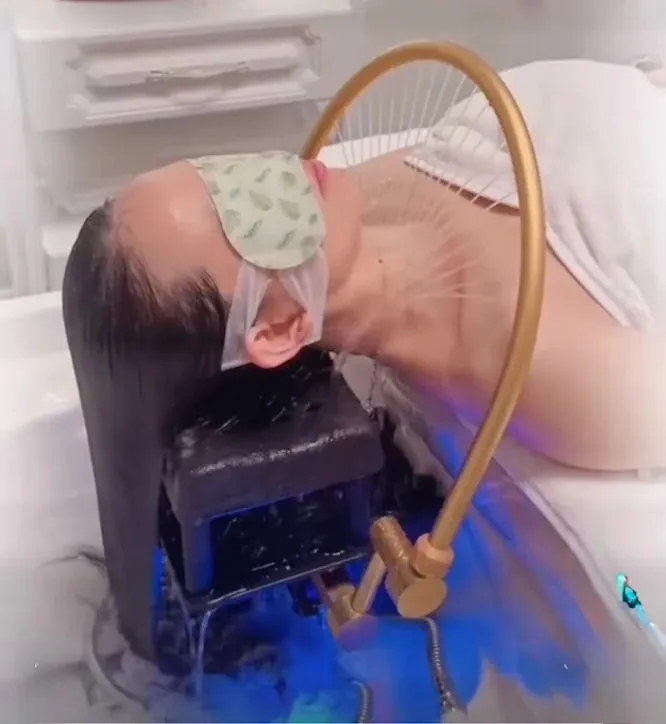
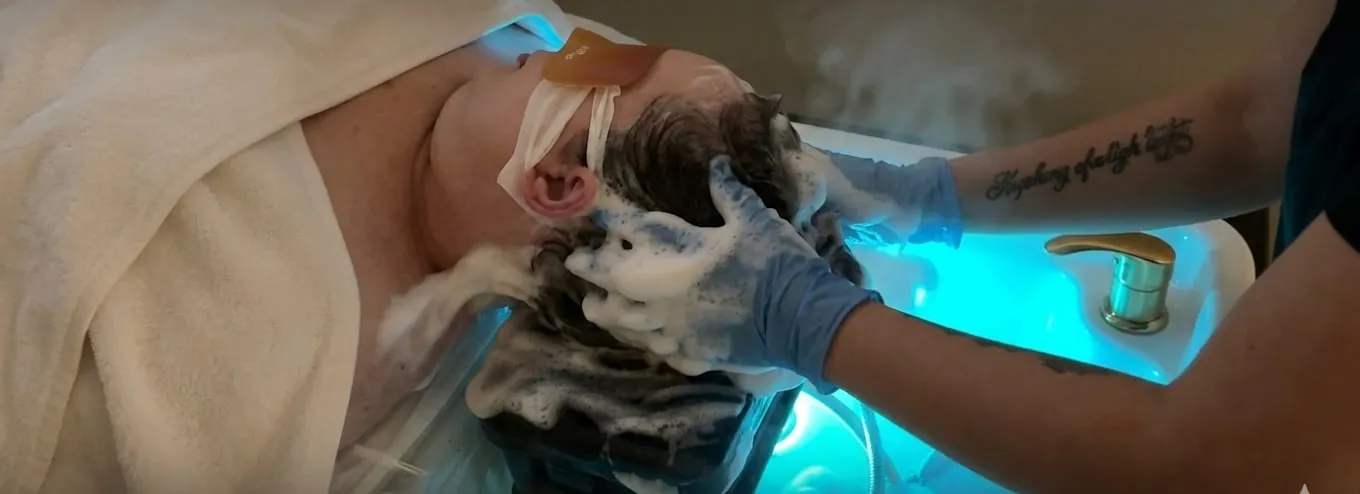
Shoes off, then a chair that tips back until your neck is supported and the back of your head sits in the basin. Warm water starts running from a fixture mounted overhead rather than a handheld sprayer, which is why both of the therapist's hands stay on your scalp the whole time. Ninety seconds in, nothing has been explained to you. The explaining is not the service.
A head spa is a scalp session given at a reclining hydrotherapy basin — head, neck and shoulders worked under running water, Milbon scalp care through the wash and the treatment, a blow-dry at the end. The order of events is printed on the menu rather than improvised in the room, and the Signature at $80 covers 60 minutes and five of those printed stages. Where the format came from sits on the page on what a head spa is.
The half that surprises people is the dry half at the end. After the last rinse your hair is towelled, dried and finished, and the upper-shoulder work happens while you are still in the chair. You walk out with hair that has been washed, treated and blown out — worth knowing if the appointment is at eight in the evening and someone is waiting.
Most of what actually registers is temperature and pressure: warm water moving over the scalp, fingertips working small circles along the hairline, a slow stretch through the neck when the shoulders come into it. Scalp work belongs to the same broad family as everything else on a massage table, and AMTA's position on massage and wellness keeps its language general for a reason — it may help with relaxation and everyday muscle tension, and that is the honest ceiling.